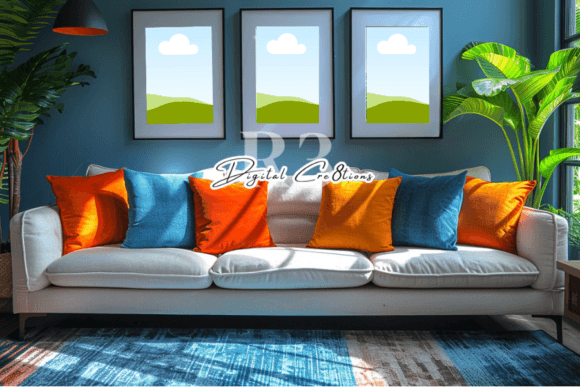
Elevate Your Art: The Canva Drag and Drop Wall Art Templates
You’ve spent hours perfecting your digital artwork, your photography, or your brand graphics. But when it comes time to show them off—a portfolio update, a social media launch, or a new product listing for your Etsy shop—the presentation often falls flat. A simple image on a white background lacks context. It doesn't let your audience, clients, or customers truly see the piece in its intended environment. This is the gap between creating art and successfully marketing it. The solution lies not in learning complex 3D software, but in leveraging a tool you likely already use.
What Are Drag and Drop Wall Art Templates?
Forget the clunky, time-consuming methods of the past. Canva Drag and Drop Wall Art Templates are a curated collection of 12 elegant living room mockups, designed from the ground up for simplicity and visual impact. Think of them as your digital gallery space. Each template is a high-quality, photorealistic scene—a stylish, modern living room complete with furniture, textures, and lighting that feels authentic. The magic is in the frame. Each scene features a designated wall art space that acts as a placeholder for your work.
The visual personality of these templates is intentionally chic and contemporary. They avoid trendy, overly stylized interiors that might date quickly, opting instead for clean lines, neutral palettes, and a sense of sophisticated calm. This style isn't just about looking good; it's a strategic choice. A well-designed mockup should elevate your art without competing with it. The overall appeal is one of professionalism and ease. They are design assets built for creators who value their time and want their work to be seen in the best possible light, literally. The realistic detailing—from the subtle shadow of the frame to the texture of the wall—helps bridge the imagination gap, allowing your audience to instantly envision your piece in their own space.
Practical Applications for Every Creator
The true strength of these Canva Templates is their versatility. They are not a one-trick pony for a single type of creator. For the graphic designer or illustrator, they are an instant portfolio builder. Instead of a flat JPEG, you can present your poster designs or typographic prints in a living room context, demonstrating scale and visual hierarchy in a real-world setting. This is a form of editorial design for your own work, telling a story about how it lives.
For marketers and brand strategists, these templates are a secret weapon for social media graphics and advertising. Launching a new art print line? Create a series of cohesive, engaging posts showing the collection in a unified environment. This builds a stronger brand identity than a simple grid of images. Bloggers and content creators can use them to illustrate articles on home decor, DIY projects, or gift guides, adding a layer of professional polish that builds credibility. Even small business owners selling physical art or prints can use them for packaging design mockups or to create compelling e-commerce listings that drive sales by showing the product in situ.
How to Use Them in Canva
Getting started requires only a basic understanding of the Canva platform. Upon purchase, you receive a PDF with a direct link. Clicking this link will open the entire set of 12 mockup templates directly in your Canva account. The process is intuitive:
- Open a Template: Choose a living room scene that matches the mood of your art.
- Locate the Frame: In the layers panel on the left or by clicking on the art in the scene, find the placeholder image or frame.
- Drag and Drop: Simply upload your artwork, logo, or graphic into your Canva uploads, then drag it directly onto the frame. Canva's smart features will automatically adjust it to fit.
- Customize: You can resize your art within the frame, adjust its position, and even use Canva's editing tools to tweak the overall image brightness or contrast if needed.
- Download: Export your final presentation as a high-resolution PNG or JPG.
This streamlined workflow turns a 30-minute Photoshop task into a 2-minute drag-and-drop operation. The emphasis is on practical application, not technical hurdles.
Making the Most of Your Investment
While the process is simple, a thoughtful approach will yield the best results. First, consider the relationship between your art and the mockup. A bold, colorful abstract piece might pop beautifully against a neutral gray wall, while a minimalist line drawing might suit a warmer, wood-toned setting. This is where your design assets work for you—having 12 options lets you curate the perfect context.
Think about your overall visual strategy. Consistency in presentation is a cornerstone of professional brand identity. You could use the same mockup set for an entire collection to create a cohesive look, or mix and match to highlight the versatility of your work. When testing, don’t just place the art and move on. Look at the final image as a whole. Does the scale feel right? Does the lighting in the mockup complement the colors in your piece? This is the digital equivalent of hanging a physical print—you’re evaluating the complete visual package.
It’s also crucial to understand the licensing. These Canva Drag and Drop Wall Art Templates are provided for personal use. This means you are free to use them for your portfolio, your social media, your blog, and your client presentations. You cannot, however, resell the template files themselves in their original form. The product was crafted using AI technology to generate the base scenes, which were then refined into the usable, high-quality mockups you receive. This innovative approach allows for the creation of realistic and varied design assets that would be costly to produce with traditional photography.
In the end, the goal is to communicate value. Whether you’re a hobbyist sharing your latest creation or a publisher